Over Coffee® is on hiatus during production of a special-edition episode. Please enjoy this reposting of one of our top episodes of 2025!
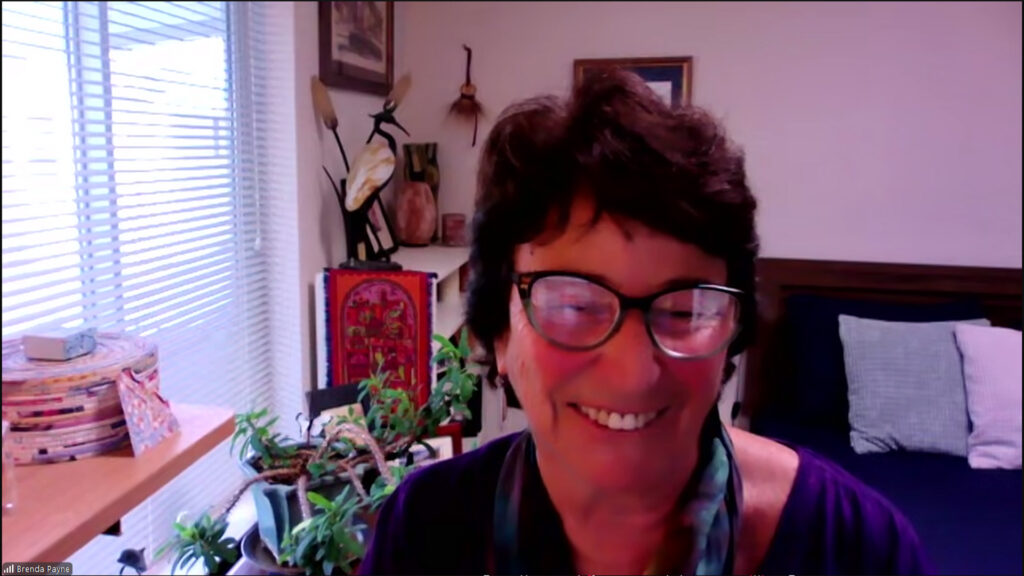
“I hated school until I was in about the fifth grade,” says California Invention Convention Executive Director Brenda S. Payne.
But then, a gifted teacher showed her some of the ways that what happened in the classroom, could be relevant to her future.
That project-based learning, combined with some of her experiences visiting an older brother who worked in cutting-edge technology, led to her passion for invention education.
And as fall semester, 2026, gets started, now is a great time to spread the word about the California Invention Convention.
Guiding the invention process
Every school year, California Invention Convention offers a challenge to K-12 students from all across the state.
That challenge: find a problem that affects you, or your family–and come up with a solution. And research, as part of the process, whether someone else has already invented something to fix the problem.
If they have? Think of ways to improve on that particular solution.
Then, in spring, these young inventors get to take their projects out of the classroom. Regional events in Northern and Southern California give them the opportunity to showcase their ideas to a team of judges.
From there, the top Award Winners go on to the National competition, at the Henry Ford Museum in Dearborn, Michigan.
Some of these young participants have wound up patenting their inventions. Some have been inspired to pursue careers in the areas they researched.
And all of them are learning vital communication and research skills.
An opportunity for leaders and educators
Meanwhile, if a teacher or youth leader would like to know more about implementing an invention education curriculum, Brenda invites them to reach out.
California Invention Convention offers a 10-week training program with an Open Source curriculum. Provided by the 42-year-old Connecticut Invention Convention, this program is customizable to any subject. according to California Invention Convention’s website. Areas which these lessons can cover include science, history, math, art and music.
As far as a time commitment goes, the program involves approximately one hour a week of in-school mentoring. Students complete additional work on their projects at home, often with parental assistance.
Then, at the conclusion of the program, students present their work to the group.
Brenda talked about her own educational journey, shared the story of the California Invention Convention and discussed some of the ways educators, parents and volunteers can get involved.
On this edition of Over Coffee® we cover:
- The project from an incredible teacher, who sparked Brenda’s interest during her own school days;
- Her early experiences with invention education;
- How the California Invention Convention started, and caught on;
- What the process is like, for students participating in the program;
- Some of the most creative inventions Brenda has seen;
- How a teacher or parent can implement invention education in their school;
- Ways students in states other than California can get involved with invention education;
- How to support California Invention Convention, as a volunteer or otherwise.