This post and podcast are for informational purposes only, and are not intended as medical advice. Please contact a healthcare professional with any medical questions.
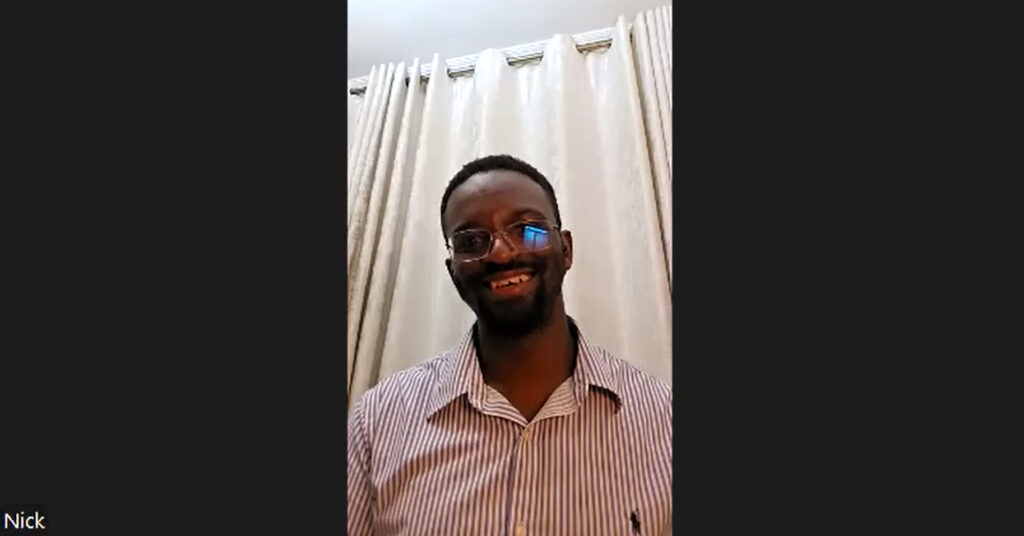
For Prothea Kenya Co-Founder and Managing Director Dr. Nick Were, emerging technology equals a pathway to better medical care–and better lives for his patients.
But the innovation doesn’t stop there.
Next, he and his colleagues add imagination, creativity and a sense of community.
Dr. Were, an orthopedic surgeon at the University of Nairobi College of Health Sciences, uses 3D printing to create prosthetic devices for amputees. The result: lighter, more durable devices, with a more comfortable fit–at about half the normal cost.
In Kenya, he explains, after an amputation, prosthetics can cost as much as $1,000–and national health insurance doesn’t cover the cost.
“Many people can’t (afford) that.”
But, he continues, lack of a prosthetic device can doom that patient to a life of poverty.
“If you can’t move, then you really can’t do much.
(“Our devices cost about half the cost of a traditional prosthetic.”)
Community, creativity and fun
Once a patient receives one of Prothea Kenya’s 3D printed prosthetic devices, Dr. Were and his colleagues begin gait training. As patients learn to navigate with their new prosthetic limbs, their sessions take place where new patients can see how the 3D printed devices work for their recipients.
Often, a second look is necessary to even determine that anyone is using a prosthesis!
That statement is especially true of the event which Dr. Were implemented in 2025: Kenya’s first “Mr. and Miss Amputee Kenya Fashion Show”!
Dr. Were’s vision for this special event extends beyond Kenya; he’d like to make the fashion show an annual, and global, event. Plans are already in progress for a second show, in the final quarter of 2026.
Extending excellence through technology
And Dr. Were, who is passionate about technology in medicine, continues to explore the ways technological advances can benefit his patients–and his colleagues.
As Chief Medical Officer at digital healthcare platform Docthus Healthtech, he updates healthcare professionals on current trends in medicine, through the use of mixed reality. He also uses virtual reality for patient pain management, as well as medical education.
“Combining…the virtual reality, the 3D printing and my orthopedic surgery practice, really is my life’s goal, my dream,” Dr. Were says.
“And I’m really happy to be living my dream.”
Dr. Were talked about his background, shared the story of creating Prothea Kenya and offered a preview of what’s next!
On this edition of Over Coffee® we cover:
- What first inspired Dr. Were to pursue medicine as his profession;
- Conditions of healthcare in Kenya;
- Dr. Were’s journey, which led to his becoming an orthopedic surgeon;
- Why he chose orthopedic surgery as his area of specialization;
- How he first became aware of the use of 3D printing for creating prostheses;
- The story of Prothea Kenya;
- Socioeconomic circumstances around amputations in Kenya;
- Prothea Kenya’s training and therapy sessions, with the goal of getting patients comfortable using their new prosthetic devices;
- The use of virtual reality in pain management;
- A study which Dr. Were and his colleagues did with VR in the burn unit of his hospital;
- How to support Prothea Kenya;
- The number of patients they’ve served since the creation of Prothea Kenya in 2023;
- A “marathon” project which they did, in response to a large donation, to serve more amputees;
- The first-ever Mr. and Miss Amputee Kenya fashion show and the vision behind it, which Prothea Kenya implemented in 2024;
- A preview of the next fashion show Dr. Were and his Prothea Kenya colleagues are planning, for later this year!
- A second initiative he and his team are implementing;
- His vision for expanding his work in 2026;
- One patient he especially wants to help.